The Tip of the Spear: A Global Guide to the World’s Most Elite Special Forces 🌍
In the shadowed corners of global conflict, where diplomacy ends and conventional warfare is too blunt an instrument, a different kind of soldier operates. Their names are whispered with a mixture of awe and fear: SAS, Green Berets, Spetsnaz, Sayeret Matkal. They are the “quiet professionals,” the “shadow warriors”—the elite Special Operations Forces (SOF) of their respective nations.
These are not just highly trained soldiers; they are living weapons, human scalpels honed by the most brutal selection processes imaginable. They are selected for their intelligence, resilience, and unwavering character, then trained to operate in small teams in the most hostile environments on Earth.
This article pulls back the curtain on this clandestine world. We will journey across the globe to provide an overview of some of the most renowned special forces units, exploring their unique histories, their specialized roles, and the punishing crucibles they endure to earn their place at the tip of the spear.
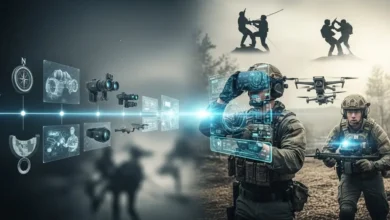
🧠 What Defines “Special Forces”? The Core Missions
While each country’s units are unique, most elite SOF are trained to execute a core set of high-stakes missions. Understanding these missions is key to understanding their purpose.
- Direct Action (DA) 🎯: The “tip of the spear” missions. These are short, violent, high-impact operations like raids, ambushes, and hostage rescues. This is the kinetic work of capturing or eliminating high-value targets.
- Special Reconnaissance (SR) 👀: The “eyes on” mission. Operating deep behind enemy lines in small, often clandestine teams, SOF operators gather critical intelligence on enemy movements, positions, and capabilities. This is a high-risk, low-visibility job.
- Unconventional Warfare (UW) 🤝: The “force multiplier” mission. This involves training, equipping, and leading indigenous or guerrilla forces against a common enemy. It is a complex, long-term mission that requires immense cultural, linguistic, and diplomatic skill. This is the traditional domain of the U.S. Army Green Berets.
- Counter-Terrorism (CT) 💥: A highly specialized subset of DA, focusing on hostage rescue and neutralizing terrorist threats, often in urban environments. This requires surgical precision and nerves of steel.
A Global Tour of Elite Units
While hundreds of SOF units exist worldwide, a few have achieved legendary status through their history, their selection process, and their famed operations.
🇺🇸 United States: The Warrior-Diplomats (Green Berets)
- Unit: U.S. Army Special Forces (The Green Berets)
- Motto: De Oppresso Liber (“To Free the Oppressed”)
- Genesis & Role: Officially established in 1952 by Colonel Aaron Bank, the Green Berets were born from the legacy of the OSS in WWII. Their primary mission is Unconventional Warfare (UW). They are designed to be “warrior-diplomats,” experts at working with and through indigenous forces. They are organized into 12-man teams called Operational Detachments-Alpha (ODAs), with each member being a specialist in weapons, engineering, medicine, or communications.
- The Crucible: The journey includes the grueling 21-day Special Forces Assessment and Selection (SFAS), designed to test character and mental fortitude above all else, followed by the lengthy Special Forces Qualification Course (Q-Course), which includes advanced tactics, MOS-specific training, and language school.
🇬🇧 United Kingdom: The Originals (SAS)
- Unit: Special Air Service (SAS)
- Motto: Who Dares Wins
- Genesis & Role: The SAS is the spiritual ancestor of most modern Western special forces. Formed by the visionary David Stirling in the North African desert during WWII, their initial role was deep-desert raiding behind German lines. Today, the SAS is a world-renowned force excelling in Special Reconnaissance and Counter-Terrorism.
- The Crucible: Their selection process is one of the most notoriously difficult in the world. It includes the “Hills Phase,” a month-long test of physical and navigational endurance in the bleak Welsh mountains, culminating in the “Long Drag”—a 40-mile march with a heavy pack that must be completed in under 20 hours.
- Legacy: The SAS was catapulted to global fame during the 1980 Iranian Embassy siege in London, where their swift, televised rescue operation set the standard for modern counter-terrorism.
🇷🇺 Russia: The blunt Instrument (Spetsnaz)
- Unit: Spetsnaz (A general term for Russian special purpose units)
- Motto: Any Mission, Any Time, Any Place (unofficial)
- Genesis & Role: The term “Spetsnaz” covers a wide range of units under different commands, from military intelligence (GRU) to internal security (FSB). Unlike their Western counterparts who often focus on surgical strikes, Spetsnaz have a reputation for being a more direct, brutally effective instrument of state power. Their roles include deep reconnaissance, sabotage, and direct action.
- The Crucible: Spetsnaz selection and training is notoriously ruthless, emphasizing raw physical toughness, psychological dominance, and extreme pain tolerance. Their martial art, Systema, is a brutal and effective form of combat.
- Legacy: From their clandestine operations during the Soviet-Afghan War to their controversial roles in modern conflicts like Chechnya and Ukraine, the Spetsnaz are shrouded in a mystique of secrecy and lethality.
🇮🇱 Israel: The Intelligence Raiders (Sayeret Matkal)
- Unit: Sayeret Matkal (“General Staff Reconnaissance Unit”)
- Motto: Who Dares Wins (borrowed from the SAS)
- Genesis & Role: Modeled on the British SAS, Sayeret Matkal is Israel’s premier special missions unit, known for its deep intelligence-gathering and hostage-rescue capabilities. It operates directly under the IDF’s Military Intelligence Directorate, blurring the line between a military unit and an intelligence agency.
- The Crucible: Candidates undergo a grueling multi-day selection camp (Gibbush) where they are pushed to their physical and mental limits under constant scrutiny from doctors and psychologists. The emphasis is on intelligence and problem-solving under extreme stress.
- Legacy: Sayeret Matkal cemented its legendary status with Operation Entebbe in 1976, a daring long-range hostage rescue mission at an airport in Uganda that is still studied by SOF units worldwide.
🇫🇷 France: The Gendarmerie Elite (GIGN)
- Unit: Groupe d’Intervention de la Gendarmerie Nationale (GIGN)
- Motto: S’engager pour la vie (“To enlist for life”)
- Genesis & Role: The GIGN is a unique entity—it is an elite counter-terrorism and hostage rescue unit that is part of France’s National Gendarmerie (a military police force). Formed in the wake of the 1972 Munich Olympics massacre, their primary domain is domestic and international counter-terrorism.
- The Crucible: GIGN selection is infamous for its psychological pressure, including “trust exercises” with live ammunition. They seek candidates with superhuman levels of self-control and calmness under fire.
- Legacy: The GIGN is famous for its successful 1994 assault on a hijacked Air France Flight 8969 in Marseille, where they stormed the plane and neutralized the terrorists, saving all remaining passengers.
共通の糸 (The Common Thread)
While their flags, languages, and specific doctrines may differ, these elite units are bound by a common DNA.
- The Selection Process: All SOF units use an incredibly demanding selection process as their primary tool. The goal is not just to find the fittest, but to find individuals with an unbreakable will, innate intelligence, and a team-first mentality. The selection is a crucible designed to expose character.
- The Small Team: The fundamental building block is the small team—the 12-man ODA, the 4-man SAS patrol. This structure demands that every member be a multi-skilled expert and fosters an incredible level of trust and cohesion.
- The Mindset: A SOF operator is a master of the basics, a creative problem-solver, and a quiet professional. They are trained to think their way through a problem first, and fight their way through it only as a last resort.
The Global Brotherhood of the Elite
The world of special operations forces is a shadowy and often misunderstood realm. These units are the ultimate expression of a nation’s military capability, entrusted with the most sensitive and dangerous missions. From the deserts of Africa to the mountains of Afghanistan, from hostage rescues in bustling cities to quiet reconnaissance deep in enemy territory, they operate at the razor’s edge of global events.
Though they serve different flags, they are united by a common creed: a commitment to excellence, an acceptance of extreme hardship, and a dedication to mission success, no matter the cost. They are the tip of the spear, the quiet professionals, a global brotherhood forged in the fires of the world’s most demanding selection processes.
❓ Frequently Asked Questions about Global Special Forces
Q1: What is the difference between “Special Forces” and “Special Operations Forces” (SOF)?
A: “Special Forces” specifically refers to the U.S. Army Special Forces (the Green Berets). “Special Operations Forces” (SOF) is a broader, umbrella term that includes all elite military units with special mission sets, such as the Navy SEALs, Air Force Pararescue, Marine Raiders, and international units like the SAS, Spetsnaz, etc. In common parlance, “special forces” is often used to describe all of them.
Q2: Which country has the “best” special forces?
A: This is a common but impossible question to answer. It’s like asking who is a “better” athlete, a marathon runner or a powerlifter. Each unit is optimized for its country’s specific geopolitical needs and strategic culture. The SAS are masters of deep reconnaissance, the Green Berets are masters of unconventional warfare, and the GIGN are masters of surgical hostage rescue. “Best” depends entirely on the mission.
Q3: How secret are these units?
A: It varies. Some units, like the U.S. Army’s Delta Force and the U.S. Navy’s SEAL Team Six (DEVGRU), are considered “Tier 1” or “Special Mission Units” whose operations, and sometimes even their existence, are classified. Other units like the Green Berets or the Army Rangers have a more public-facing role and openly recruit. However, the specific details of all SOF operations are almost always classified.
Q4: Why are their selection processes so brutal?
A: The selection process is not about physical brutality for its own sake. It is a carefully calibrated psychological tool. By pushing candidates to their absolute physical and mental limits, the instructors can see what is left when everything else—ego, strength, motivation—has been stripped away. It is designed to find the 1% of individuals who not only won’t quit but can also think clearly and make good decisions when they are cold, hungry, exhausted, and under immense pressure.
Disclaimer: Information about special operations forces is often sensitive and subject to change. This article is a general overview based on publicly available, unclassified information.