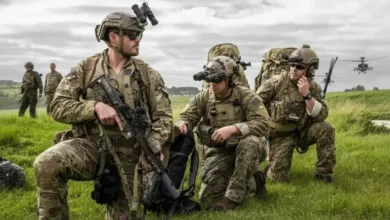
So You Want to Be a Green Beret? The Ultimate Guide to the SF Pipeline
They are known as the “Quiet Professionals.” They are warrior-diplomats, masters of unconventional warfare, and some of the most highly skilled and respected soldiers in the world. They are the U.S. Army Special Forces—the Green Berets. Their motto, De Oppresso Liber, means “To Free the Oppressed,” a mission that takes them to the most remote and dangerous corners of the globe.
Many are called, but few are chosen. The path to earning the coveted Green Beret is not a job application; it is a relentless, soul-testing journey designed to find a very specific type of individual. It is a crucible that will test your body, shatter your ego, and reveal the unshakeable core of your character.
This is not a Hollywood script. This is your map. If you feel that call, if you believe you have what it takes, this guide will provide a no-nonsense, step-by-step look at the path to joining this elite brotherhood.
🧠 Who Are Green Berets? The Mindset Before the Mission
Before you even think about physical fitness scores or recruiter meetings, you must first understand the ethos. Special Forces is not looking for muscle-bound superheroes; they are looking for intelligent, adaptable, and incredibly resilient problem-solvers.
A successful Green Beret is:
- More Than Muscle: Physical strength is the baseline, not the main event. Mental fortitude, emotional maturity, and unwavering self-discipline are far more important.
- An Unconventional Thinker: Special Forces operators work in small teams, often deep in foreign territory. They must be able to think creatively, solve complex problems with limited resources, and adapt to rapidly changing situations.
- A Humble Professional: Arrogance is a liability. A Green Beret is a “quiet professional” who is confident in his abilities but is also a team player, eager to learn, and able to work with anyone, from a foreign general to a village elder.
- A Master of the Basics: Before you can be special, you must be a master of the fundamental soldiering skills. Marksmanship, land navigation, and small unit tactics must be second nature.
- Culturally Astute 🌍: The core mission often involves training and fighting alongside indigenous forces. A Green Beret must be a natural teacher, a diplomat, and a student of culture.
If this description resonates with a deep part of who you are, then you may be ready to consider the path.
🛤️ The Two Paths to the Pipeline
There are two primary ways a candidate can enter the Special Forces training pipeline.
1. For Civilians: The 18X “X-Ray” Program
This is a direct enlistment option for highly qualified civilians.
- What it is: The 18X program allows you to enlist in the U.S. Army with the sole goal of becoming a Special Forces soldier. You are given an “18X” enlistment contract, which slots you for the entire training pipeline.
- Pros: It is the most direct route from civilian life to Special Forces. You don’t have to serve time in a conventional unit first.
- Cons: It is a high-risk, high-reward path. If you fail at any point in the pipeline (and the attrition rate is extremely high), you will be re-assigned to another job in the Army based on the “needs of the Army.” You lose control of your career path. You will also be entering this demanding environment with no prior military experience, which can be a significant disadvantage.
2. For Active-Duty Soldiers: The “Green to Green” Path
This path is for soldiers already serving in the U.S. Army.
- What it is: An enlisted soldier in any MOS (job) can volunteer for Special Forces training once they meet the time-in-service and rank requirements (typically Specialist/E-4 or higher).
- Pros: You enter the pipeline as a more mature, experienced soldier. You understand the Army culture, and you’ve had time to develop your core soldiering skills. If you fail, you simply return to your original MOS and unit.
- Cons: It is a longer path. You must serve in a conventional unit first, which may take several years before you get your shot.
✅ The Checklist: Non-Negotiable Basic Requirements
Before you can even attempt the hard part, you must meet the baseline requirements. These are firm and are the first thing a recruiter will check. You can find the most current and detailed requirements on the official recruiting websites.
- Citizenship: Must be a U.S. citizen.
- Age: 20-36 for active-duty soldiers. 18X candidates must be 20 by the time they graduate from their initial training and begin the SF pipeline.
- ASVAB Score: You must achieve a General Technical (GT) score of 110 or higher on the official ASVAB test. This is non-negotiable and measures your ability to learn and solve problems.
- Physical Fitness: You must be able to pass the Army Combat Fitness Test (ACFT) with high marks. Unofficially, you should be aiming to max out the test. You should also be a strong swimmer.
- Medical: You must pass a stringent medical exam and be able to qualify for Airborne training. Vision must be correctable to 20/20.
- Security Clearance: Must be able to obtain a SECRET security clearance. This means a clean criminal record and a stable personal history.
- Official Information: Before meeting a recruiter, thoroughly review the official GoArmy page for Special Forces to be as informed as possible.
⛰️ The Pipeline: Forging a Green Beret, Step-by-Step
This is the journey. It is a series of schools and selection processes designed to systematically build a Special Forces soldier while weeding out those who don’t have what it takes.
Step 1: Initial Entry Training & Airborne School
- For 18X: You will first attend Basic Combat Training (BCT) and then Advanced Individual Training (AIT) to become qualified as an Infantryman (11B) through the Army’s 22-week OSUT (One Station Unit Training). This gives you the essential soldiering foundation.
- Airborne School 🪂: All Special Forces soldiers must be airborne-qualified. You will attend the 3-week Basic Airborne Course at Fort Moore, GA. You will learn how to properly exit an aircraft and parachute safely to the ground. This is a physical and mental challenge and is the first major filter.
Step 2: Special Forces Preparation Course (SFPC)
After Airborne, you’ll be sent to Fort Bragg, NC, the home of Special Forces, to attend a preparation course. This course is designed to prepare your body and mind for the brutal test to come: Selection. You will focus on:
- Intense Physical Conditioning: Running, rucking, and functional strength exercises designed to build durability.
- Land Navigation: You will spend days and nights learning to master map and compass skills. This is a critical skill where many fail.
Step 3: The Crucible – Special Forces Assessment and Selection (SFAS)
This is the legendary gatekeeper. SFAS is a 21-day “job interview” from hell. Its purpose is not to train you, but to assess your character and your potential to succeed in the Q-Course and on a Special Forces team. All assessment and training is conducted by the U.S. Army John F. Kennedy Special Warfare Center and School (USAJFKSWCS).
- The Mind Game: SFAS is primarily a psychological test. The instructors will put you under immense physical and mental stress with sleep deprivation, food deprivation, and ambiguous instructions. They are looking to see how you handle pressure, how you solve problems, and if you have the internal drive to continue when your body is screaming at you to quit.
- Individual and Team Events: You will be tested on your individual capabilities (especially in land navigation, known as “Star Course”) and on your ability to work as a team member during “Team Week,” where you’ll be given seemingly impossible tasks with a group of equally exhausted candidates.
- The “Whole Man” Concept: The instructors, who are all veteran Green Berets, are constantly observing you. They are assessing you based on the “Whole Man” concept: physical fitness, intelligence, motivation, and leadership potential. They are asking one question: “Would I want this person on my team in a life-or-death situation?”
At the end of SFAS, you are either “selected” to continue training or you are dropped from the program. There is no in-between.
Step 4: The Special Forces Qualification Course (The “Q-Course”)
If you are selected, you now have the privilege of beginning the training to actually become a Green Beret. The Q-Course is a long and arduous academic and tactical school, lasting anywhere from 6 months to over a year, depending on your assigned MOS.
The Q-Course is broken into phases:
- Phase I: Orientation and History (6 weeks): Introduction to SF history and doctrine.
- Phase II: Small Unit Tactics (13 weeks): Mastering advanced patrolling, raids, ambushes, and other essential combat skills at the squad and platoon level.
- Phase III: MOS Qualification (14-50 weeks): This is where you are trained in your specific Special Forces job. You will be assigned one based on your aptitude, background, and the needs of the Army:
- 18B (Weapons Sergeant): Master of U.S. and foreign weapons systems.
- 18C (Engineer Sergeant): Expert in demolitions, construction, and field engineering.
- 18D (Medical Sergeant): The most academically demanding path. Trained to a level far beyond a normal combat medic, able to perform minor surgery and provide long-term trauma care.
- 18E (Communications Sergeant): Master of all forms of communication technology, from satellite systems to field-expedient antennas.
- Phase IV: Unconventional Warfare (UW) – “Robin Sage” (4 weeks): This is the legendary culminating exercise. You and your team will be inserted into a fictional “hostile” country (played out across the forests of North Carolina) with the mission to train and lead a guerrilla force. It is the ultimate test of everything you have learned.
- Phase V: Language and Culture (18-24 weeks): After Robin Sage, you will attend language school to become proficient in a language critical to your assigned Special Forces Group (e.g., Spanish, French, Arabic, Russian, etc.).
- Phase VI: Graduation: If you have successfully completed every phase, you will attend the Regimental First Formation, where you will finally don the Green Beret and be formally welcomed into the brotherhood.
Final Words of Advice: The Unspoken Truths
- It’s a Mental Marathon, Not a Physical Sprint: The strongest person at the start of SFAS is rarely the one standing at the end. The winners are the ones who refuse to quit, who can compartmentalize their misery, and who focus on putting one foot in front of the other.
- Be the “Gray Man”: In Selection, do not try to be the hero or the loudmouth. Be quiet, competent, and reliable. Do your job, help your teammates, and never draw negative attention to yourself.
- Teamwork Over Ego: Special Forces is about the team. Show the instructors that you are willing to put the team’s success before your own personal comfort or glory. Help the guy struggling next to you.
Conclusion: The Beginning of a New Journey
Earning the Green Beret is not the end of the road. It is the beginning. It is a license to enter a world of continuous learning, constant training, and immense responsibility. The path is brutally difficult, and most who attempt it will fail. It is designed that way.
But for those who succeed, for those who prove they have the physical grit, the mental agility, and the unwavering character, the reward is the chance to live a life of consequence, to serve at the tip of the spear, and to earn a place in one of the most distinguished brotherhoods in the history of warfare. The journey will demand everything you have, and then more. The question is: do you have it to give?
❓ Frequently Asked Questions about Joining Special Forces
Q1: Where can I find official information and contact a Special Operations recruiter?
A: The absolute best place to start is the official U.S. Army Special Operations Recruiting (SORB) website. It has detailed information, FAQs, and a portal to contact a recruiter who specializes in programs like 18X. Do not rely on unofficial forums or social media for definitive answers.
Q2: Can women join Special Forces?
A: Yes. As of 2016, all military occupational specialties, including Special Forces, are open to qualified women. Female candidates go through the exact same SFAS and Q-Course as their male counterparts, with no modifications to the standards.
Q3: What is the attrition (failure) rate for the SF pipeline?
A: The attrition rate is extremely high. Historically, about 70-80% of candidates who begin the pipeline will not make it to graduation. The highest rates of failure occur during the SFAS and the MOS-specific phases of the Q-Course.
Q4: How long does the entire process take from enlistment to graduation for an 18X?
A: For an 18X candidate, the entire journey—from the day they ship to basic training to the day they graduate the Q-Course—can take approximately two years, depending on their assigned language and MOS.
Q5: Do I need a college degree?
A: A college degree is not required to become an enlisted Green Beret. However, it is highly valued and demonstrates the kind of intelligence and commitment the community looks for. For those wishing to become a Special Forces Officer (18A), a four-year degree is required.
Disclaimer: All information is provided for general guidance. The requirements, phases, and structure of the Special Forces training pipeline are subject to change. The official U.S. Army and U.S. Army Special Operations Recruiting websites are the only definitive sources of information.