SOCOM Explained: The Unified Command Behind America’s Special Operations Forces
The Unified Sword: The Story of United States Special Operations Command (US SOCOM)
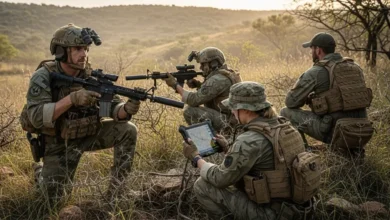
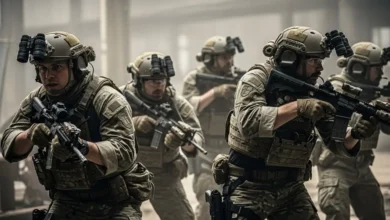
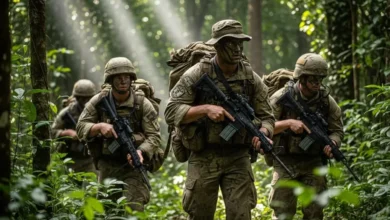
In every corner of the globe, in the most unforgiving environments, a unique breed of warrior operates in the shadows. They are the Green Berets, the Navy SEALs, the Army Rangers, the MARSOC Raiders, and the Air Force Special Tactics airmen. But who commands these commandos? The answer lies with a single, powerful entity: the United States Special Operations Command, or US SOCOM.
This is not just another headquarters; it is the unified sword and shield of America’s elite forces. This article will demystify SOCOM, tracing its creation from the ashes of a tragic failure, detailing the legendary units that form its components, explaining its core truths and global mission, and illustrating its indispensable role in modern warfare. This is the story of how America’s most specialized warriors were brought together under one command to become the most formidable special operations force in history.
A Legacy of Failure: The Birth of a Unified Command
The history of US SOCOM begins not with a victory, but with a catastrophic failure that exposed deep flaws within the U.S. military. That failure was Operation Eagle Claw in 1980, the ill-fated mission to rescue American hostages in Iran. The operation was a disaster of inter-service rivalry and miscommunication. Helicopters from the Navy and Marines, pilots from the Air Force, and operators from the Army’s new Delta Force had never effectively trained or communicated together. The result was a fiery wreck in the desert, eight American deaths, and a national humiliation.
The Holloway Report, which investigated the failure, was scathing. It concluded that the “ad hoc” nature of the joint force was a primary cause of the disaster. This single event became the catalyst for the most significant military reforms in modern American history.
The Legislative Fix: Goldwater-Nichols and Nunn-Cohen
Congress took action. The Goldwater-Nichols Act of 1986 was a landmark piece of legislation that reorganized the entire Department of Defense, forcing the different service branches to work together under unified combatant commands.
Building on this, the Nunn-Cohen Amendment to the National Defense Authorization Act for 1987 went a step further. It specifically mandated the creation of a single, unified command for all Special Operations Forces (SOF). On April 16, 1987, the United States Special Operations Command (US SOCOM) was officially activated at MacDill Air Force Base in Tampa, Florida. Its mission was to ensure the tragedy of Eagle Claw would never happen again by providing a permanent structure to “man, train, and equip” all of America’s SOF units.
What is SOCOM? The “University” of Special Operations
It’s crucial to understand what SOCOM is—and what it isn’t. SOCOM is a Unified Combatant Command, one of eleven that control all U.S. military forces. However, it is unique. While most commands are geographical (like European Command or Indo-Pacific Command), SOCOM is “functional,” responsible for a specific capability: special operations.
SOCOM vs. JSOC: A Critical Distinction
This is where many get confused. SOCOM is often mistaken for its most secretive sub-component, the Joint Special Operations Command (JSOC). The relationship is best understood with an analogy:
- SOCOM is the University: It is the large, parent organization responsible for the entire spectrum of special operations, from training foreign armies to direct action. It oversees all SOF units, budgets, and long-term strategy.
- JSOC is the Ph.D. Program: It is a small, specialized command within SOCOM, tasked with controlling the most elite “Tier 1” units (like Delta Force and DEVGRU) for the nation’s most sensitive and high-stakes missions.
All of JSOC falls under SOCOM, but SOCOM is vastly larger and has a much broader mandate.
SOCOM’s Unique Power: The “Fourth Branch”
The Nunn-Cohen Amendment gave SOCOM powers unlike any other combatant command. Most significantly, it was granted its own budget authority under what is known as Major Force Program 11 (MFP-11). This means SOCOM can research, develop, and purchase its own specialized equipment—from rifles and body armor to stealth helicopters and mini-submarines—without having to ask the individual service branches for money. This financial independence allows SOCOM to innovate rapidly and equip its operators with the best technology available, effectively making it a “fourth branch” of the armed forces in all but name.
The Components of SOCOM: A Tour of America’s Elite
US SOCOM is the parent command for all the Special Operations Forces from the four main service branches. These are known as the service components.
United States Army Special Operations Command (USASOC)
The largest component of SOCOM, USASOC provides a wide range of capabilities, from surgical strikes to long-term unconventional warfare. Its key units include:
- U.S. Army Special Forces (The Green Berets): Masters of unconventional warfare, foreign internal defense, and special reconnaissance. They are experts in working with and training indigenous forces.
- 75th Ranger Regiment: The Army’s premier light infantry direct-action force. They specialize in large-scale raids, airfield seizures, and supporting other special operations units.
- 160th Special Operations Aviation Regiment (SOAR) – “The Night Stalkers”: The world’s most elite aviation unit, flying highly modified helicopters to insert and extract operators in the most dangerous conditions imaginable. Their motto is “Night Stalkers Don’t Quit.”
- Psychological Operations (PSYOPS) and Civil Affairs Units: These units specialize in influencing foreign populations and working with local governments, often called the “soft power” of SOCOM.
Naval Special Warfare Command (NAVSPECWARCOM)
This command provides SOF capabilities primarily in the maritime domain. Its most famous units are:
- U.S. Navy SEALs (Sea, Air, and Land): Legendary for their grueling training (BUD/S) and operational flexibility. They are experts in direct action, special reconnaissance, and hydrographic reconnaissance in coastal and riverine environments.
- Special Warfare Combatant-Craft Crewmen (SWCC): The “boat guys” who pilot and maintain a fleet of high-speed, heavily armed special operations watercraft, providing clandestine insertion and extraction for the SEALs.
Air Force Special Operations Command (AFSOC)
AFSOC provides specialized air power for special operations. Its airmen are highly trained specialists who operate on the ground and in the air.
- Pararescuemen (PJs): Elite combat medics whose motto is “That Others May Live.” They are experts in personnel recovery, capable of rescuing downed pilots or isolated soldiers from any environment.
- Combat Controllers (CCTs): Experts in airfield seizure and battlefield air traffic control. They often embed with Army and Navy teams to call in devastatingly precise airstrikes.
- Special Reconnaissance (SR): Operators who provide battlefield intelligence, often deep behind enemy lines.
Marine Corps Forces Special Operations Command (MARSOC)
The newest component of SOCOM, established in 2006. MARSOC provides expeditionary special operations capabilities. Its primary combat units are:
- Marine Raiders: Organized into the Marine Raider Regiment, these operators are trained for direct action, special reconnaissance, and foreign internal defense, carrying on the legacy of the Marine Raiders of World War II.
The SOF Truths and Core Activities: The “How” and “Why” of SOCOM
The ethos of all special operations forces is captured in the five SOF Truths, which prioritize mindset and people over technology. These truths are the cultural bedrock of SOCOM.
- Humans are more important than hardware.
- Quality is better than quantity.
- Special Operations Forces cannot be mass-produced.
- Competent SOF cannot be created after emergencies occur.
- Most special operations require non-SOF support.
These truths guide SOCOM’s primary missions, which are officially listed as 12 core activities. The most prominent include:
- Direct Action (DA): Short-duration strikes and small-scale offensive actions, such as raids, ambushes, and hostage rescues.
- Special Reconnaissance (SR): Acquiring information on an enemy or an environment in a covert or clandestine manner.
- Unconventional Warfare (UW): Training and supporting foreign resistance or insurgency movements. This is the traditional mission of the Green Berets.
- Counter-Terrorism (CT): The prevention, deterrence, and response to terrorist acts. This is a primary mission for JSOC units.
- Foreign Internal Defense (FID): Training and advising foreign militaries to help them protect their own country.
A Global Footprint: Theater Special Operations Commands (TSOCs)
US SOCOM exercises its global reach through a network of Theater Special Operations Commands (TSOCs). Each TSOC is aligned with one of the geographic combatant commands and acts as the lead for all special operations in that region.
- SOCEUR: Europe
- SOCCENT: The Middle East (Central Command)
- SOCPAC: The Pacific
- SOCAFRICA: Africa
- SOCSOUTH: South and Central America
- SOCKOR: Korea
- SOCNORTH: North America
This structure allows SOCOM to maintain a persistent presence around the world, building relationships with partner nations and responding rapidly to crises.
Conclusion: The Enduring Need for a Unified Force
The creation of the United States Special Operations Command was a watershed moment in modern military history. It transformed a collection of disparate, often competing elite units into a cohesive, unified, and globally effective force.
From the legislative ashes of Operation Eagle Claw, SOCOM rose to become the world’s preeminent special operations organization, giving the United States a strategic tool of unmatched precision and flexibility. It is a learning organization, built on the principle that humans are more important than hardware and that quality can never be sacrificed for quantity.
In an age of “grey zone” conflict, cyber warfare, and non-state actors, the role of SOCOM is more critical than ever. It provides America with a range of options beyond conventional warfare, proving that the concept of a unified command for its most specialized warriors was not just a good idea—it was a necessary evolution for survival and dominance in the 21st century.
What aspect of US SOCOM’s mission or history do you find most compelling? Share your thoughts in the comments below, subscribe for more deep dives into military and defense topics, and share this article.
To learn about SOCOM’s most secretive component, read our detailed article on The History and Role of JSOC.
Frequently Asked Questions (FAQs)
Q1: What is the official motto of US SOCOM?
A: SOCOM does not have a single official motto. However, its official vision is to “Win our Nation’s battles by providing the world’s most capable Special Operations Forces.” Unofficially, the Latin phrase “Sine Pari,” meaning “Without Equal,” is often associated with the command.
Q2: How does a person join a SOCOM unit?
A: There is no direct path to “join SOCOM.” A person must first join one of the military service branches (Army, Navy, Air Force, or Marines). From there, they must volunteer and pass one of the notoriously difficult selection and training courses for a specific special operations unit, such as Army Special Forces Assessment and Selection (SFAS), Navy BUD/S, or the Ranger Assessment and Selection Program (RASP).
Q3: Are all SOCOM units focused on combat?
A: No. While direct action and counter-terrorism are high-profile missions, a significant portion of SOCOM’s work involves non-combat roles. Units like the Army’s Civil Affairs and Psychological Operations teams, as well as the Green Berets, spend much of their time building relationships, training partner forces, and engaging in “soft power” influence missions around the world.
Q4: How is SOCOM funded?
A: SOCOM is funded through its own dedicated budget line within the Department of Defense, known as Major Force Program 11 (MFP-11). In fiscal year 2023, the SOCOM budget was approximately $13.7 billion. This independent funding allows it to develop and acquire SOF-specific equipment and resources.
References (APA Style)
- Robinson, L. (2013). One Hundred Victories: Special Ops and the Future of American Warfare. PublicAffairs.
- United States Special Operations Command. (n.d.). SOCOM History. Official SOCOM Website. Retrieved from [socom.mil].
- United States Special Operations Command. (2020). SOF Reference Manual.
- Holloway, J. L., et al. (1980). Rescue Mission Report. U.S. Department of Defense.