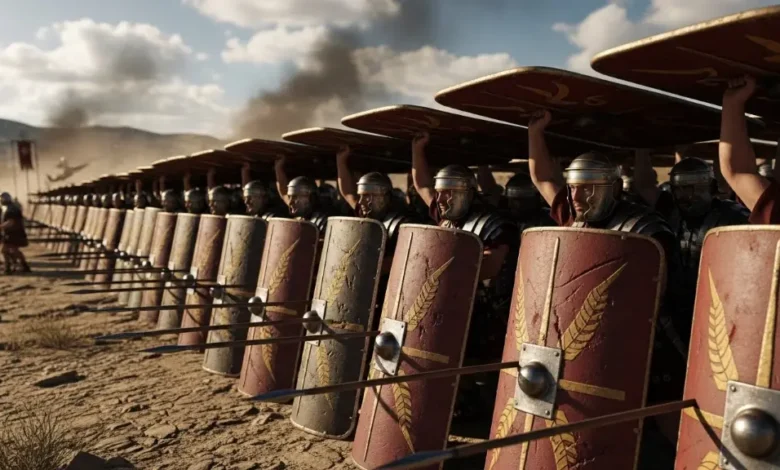
Roman Legions
The Roman Legions were the backbone of Rome’s military power for over a millennium and represent one of the first fully professional, state-controlled armies in history. Within the wider category of Ancient Military Units, the Roman legion stands as a turning point in the evolution of organized warfare.
Origins of the Roman Legion
Early Roman armies were composed of temporary citizen militias, a system that proved ineffective during prolonged conflicts. Military reforms in the late Roman Republic, especially under Gaius Marius, transformed the legion into a permanent professional force.
- State-funded equipment and salaries
- Standardized training and discipline
- Long-term enlistment instead of seasonal service
These reforms created a force capable of sustained campaigns and long-term territorial control.
Organization and Command Structure
A standard Roman legion consisted of approximately 4,800–6,000 soldiers, organized into a hierarchical system that allowed exceptional tactical flexibility on the battlefield.
- Legion – overall command unit
- Cohorts – primary tactical maneuver elements
- Centuries – disciplined fighting blocks
- Auxiliaries – cavalry, archers, and specialist troops
Compared to rigid formations like the Macedonian Phalanx, Roman legions could adapt rapidly to changing terrain and battlefield conditions.
Weapons and Protective Equipment
Roman soldiers balanced heavy protection with mobility, using standardized equipment optimized for close formation combat and durability.
- Gladius – short stabbing sword for close combat
- Pilum – heavy javelin designed to disable enemy shields
- Scutum – large curved shield offering full-body protection
- Lorica – mail or segmented armor
Battlefield Tactics and Engineering
Roman warfare emphasized discipline, coordination, and engineering superiority, with legions fighting in controlled rotations and maintaining cohesion even under extreme pressure.
- Shield-wall formations and tactical reserves
- Rotation of fresh troops during combat
- Rapid construction of fortified marching camps
- Advanced siege engineering and logistics
This systematic approach allowed legions to defeat both static and highly mobile enemies, including later nomadic forces such as the Mongol Tumen.
Major Campaigns and Expansion
Roman legions operated across Europe, North Africa, and the Near East, adapting successfully to forests, deserts, mountains, and urban combat environments.
- Conquest of Gaul
- Punic Wars against Carthage
- Campaigns in Britannia and Germania
- Conflicts with Eastern powers like the Persian Immortals
Strengths and Limitations
Strengths
- Highly disciplined professional soldiers
- Superior logistics and supply systems
- Integrated military engineering
- Flexible and adaptive doctrine
Limitations
- Dependence on extended supply lines
- Vulnerability to internal political instability
- Challenges against extreme hit-and-run warfare
Legacy of the Roman Legions
The Roman legion became the template for future professional armies and influenced medieval European warfare as well as modern military organization. Within the history of greatest military units, the Roman legions remain one of the most effective and influential military systems ever created.