Polish Winged Hussars
The Legendary Elite Cavalry That Conquered Armies Ten Times Their Size
Origins of the Winged Hussars
The Polish Winged Hussars were formed in the 16th century as an elite heavy cavalry unit.
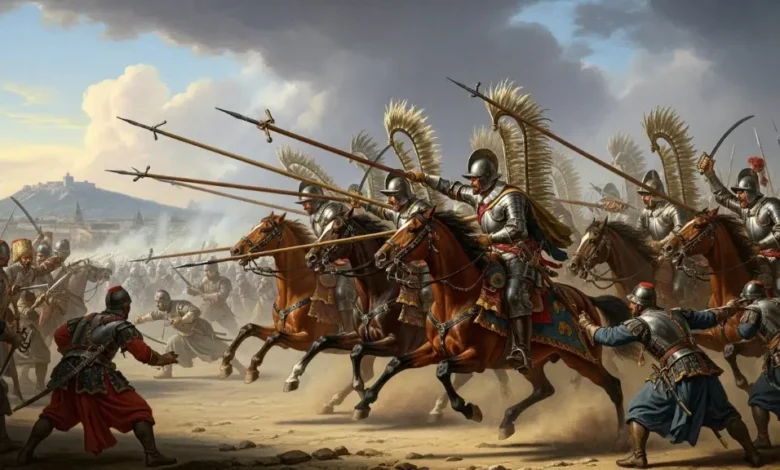
Their name comes from the distinctive winged armor worn during battle,
which served both as a psychological weapon and a symbol of nobility.
Training and Cavalry Tactics
Winged Hussars were trained from childhood in horsemanship and combat. Their skills included:
- Mounted lance charges and shock tactics
- Swordsmanship and sabre fighting
- Archery on horseback
- Coordination in tight cavalry formations
They emphasized speed, precision, and overwhelming force to break enemy lines.
Equipment and Armor
The Hussars were equipped for both offense and defense:
- Lances with steel tips for decisive charges
- Sabres, swords, and pistols for close combat
- Light but reinforced armor including the iconic winged attachments
- Highly trained warhorses adapted for battlefield mobility
Notable Battles
Winged Hussars distinguished themselves in many key conflicts:
- Battle of Kircholm (1605) – decisive victory over Swedish forces
- Battle of Vienna (1683) – charged to break the Ottoman siege
- Numerous engagements against Cossacks, Russians, and Ottoman forces
Strengths and Weaknesses
Strengths
- Shock cavalry with overwhelming battlefield impact
- Highly mobile and disciplined units
- Psychological intimidation through wings and disciplined charges
Weaknesses
- Expensive to maintain and equip
- Dependent on large, trained horses
- Vulnerable to massed infantry or artillery without support
Legacy of the Polish Winged Hussars
The Winged Hussars are remembered as one of the most effective cavalry units in European history.
Their unique combination of mobility, shock tactics, and psychological warfare
inspired future cavalry doctrines and remain an enduring symbol of Polish martial tradition.
See also: Rajput Warriors for comparison of elite cavalry cultures.