How to Choose the Right Plate Carrier and Armor Plates
Selecting ballistic protection is one of the most critical decisions you will make when building your kit. To choose the right plate carrier, you must first understand the relationship between the vest and the armor plates it holds. The carrier is the delivery system, but the plates provide the actual life-saving protection.
Your choice should be dictated by your operational environment and the specific threats you expect to encounter. A setup for home defense differs significantly from gear designed for long-range patrolling or high-risk professional duty. This guide will simplify the technical aspects of armor levels and carrier ergonomics.
Understanding Armor Protection Levels (NIJ Standards)
The first step is deciding which level of protection you need. The National Institute of Justice (NIJ) sets the standards for ballistic resistance. Most users look for a balance between weight and the ability to stop common rifle calibers like 5.56 NATO or 7.62x39mm.
- Level III: Designed to stop 7.62mm FMJ (NATO) lead core rifle ammunition. Great for general rifle threats.
- Level III+: A non-NIJ term used by manufacturers to indicate the plate can also stop M855 (Green Tip) or higher-velocity rounds.
- Level IV: The highest rating, designed to defeat armor-piercing (AP) rifle rounds. These are typically the heaviest plates available.
Plate Materials: Steel vs. Ceramic vs. PE
Ceramic plates are the industry standard for professional use. They are lighter than steel and excel at absorbing energy from high-velocity impacts. Polyethylene (PE) plates are the lightest option, often floating in water, but they cannot stop armor-piercing rounds.
Avoid steel plates for tactical use if possible. While cheap, they are extremely heavy and present a high risk of fragmentation (spalling), which can send bullet shards into your neck or limbs upon impact.
Sizing the Plates to Your Body
When you choose a plate carrier, remember that the carrier must match the plate size, and the plate must match your torso size. A plate that is too large will restrict your arm movement and prevent you from shouldering your rifle properly.
A plate that is too small leaves vital organs like your heart and lungs exposed. Measure from nipple to nipple and from the top of your sternum to about two inches above your belly button. This area represents your “vital box” that needs protection.
Common Plate Cuts
- SAPI Cut: The standard military shape, offering a balance of coverage and mobility.
- Shooter’s Cut: Features more aggressive tapering at the shoulders for better weapon manipulation.
- Swimmer’s Cut: The most minimalist shape, offering maximum range of motion for swimming or high-cardio activities.
Selecting the Best Carrier for Your Plates
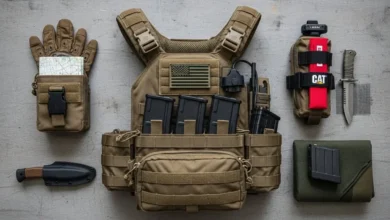
Once you have your plates, you need a high-quality plate carrier to hold them. The carrier should have internal plate straps to prevent the armor from shifting during movement. This stability is crucial for maintaining protection during a fight.
Look for 500D Cordura construction for a mix of durability and weight savings. If you plan to carry a lot of gear, ensure the carrier has a structural cummerbund. This helps transfer the weight of the plates and mag pouches from your shoulders to your hips.
Comfort and Heat Management
Ballistic plates are essentially heaters strapped to your chest. To mitigate this, choose a carrier with breathable mesh padding or integrated air channels. Some modern carriers allow for the use of “ice plates” or specialized ventilation pontoons to keep your core temperature down.
Check the shoulder strap design. Wide, padded straps are essential for Level IV setups, while thin, unpadded straps are better if you frequently wear tactical backpacks. Your gear should never cause numbness or circulation issues in your arms.
Plate and Carrier Selection FAQ
Can I put any plate in any carrier?
No. You must ensure the plate pocket is large enough for the thickness of your plates. Ceramic Level IV plates are often thicker than Level III PE plates. Check the manufacturer’s specs for plate thickness compatibility.
What is a “Multi-Curve” plate?
Multi-curve plates are shaped to follow the natural contour of the human torso. They are significantly more comfortable than flat or single-curve plates, especially during long-duration wear.
Should I buy “Side Plates”?
Side plates provide extra protection for your obliques but add weight and width. They are recommended for high-threat environments (static guard duty, urban combat) but are often skipped for high-mobility missions.