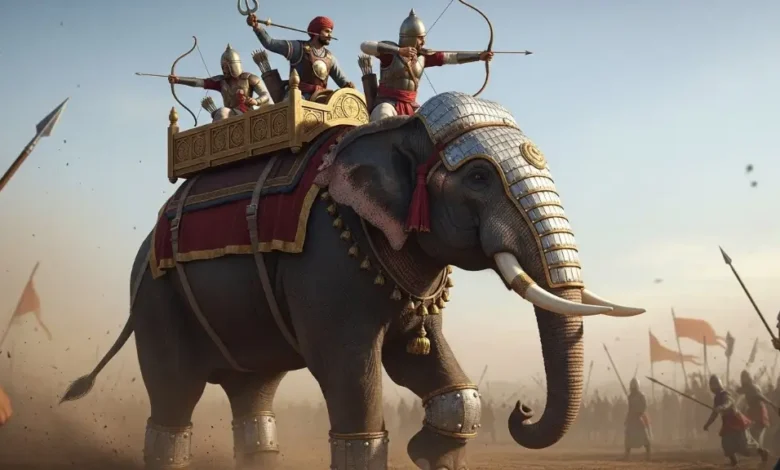
Mauryan War Elephant Corps
The Mauryan War Elephant Corps of ancient India was one of the earliest and most formidable examples of armored elephant units in history. Under the Mauryan Empire (c. 321–185 BCE), elephants served as mobile fortresses on the battlefield, delivering both psychological terror and physical devastation.
Origins and Development
War elephants were used in India long before the Mauryan period, but Emperor Chandragupta Maurya systematized their deployment into specialized corps. Trained elephants carried armored mahouts (riders) and troops into battle, becoming central to the Mauryan combined-arms strategy.
Structure and Organization
- Heavily armored elephants with protective head and body gear
- Mahout controlling the elephant and guiding its charge
- Infantry or archers mounted on the elephant for ranged attacks
- Integration with cavalry, chariots, and infantry for maximum battlefield impact
Weapons and Equipment
- Iron-tipped tusks for piercing enemy ranks
- Bows and javelins mounted on elephants for ranged combat
- Spiked armor or howdahs for crew protection
- Drums and war horns to coordinate movements
Tactical Use on the Battlefield
Mauryan elephants served multiple roles:
- Shock troops breaking enemy lines
- Platforms for archers to gain elevated firing positions
- Psychological warfare, causing fear among horses and infantry
- Securing flanks and protecting slower units
Their effectiveness depended on careful coordination with infantry and cavalry. Overextension or panic among elephants could create chaos within friendly ranks, a known tactical risk.
Major Campaigns
Mauryan elephants were deployed in numerous campaigns across the Indian subcontinent and into Central Asia. Key campaigns include battles against regional kingdoms such as the Nanda, Kalinga, and campaigns led by Seleucid forces, where elephants helped demonstrate the Mauryan army’s overwhelming strength.
Strengths and Weaknesses
Strengths
- Unmatched psychological impact on enemy forces
- Heavy physical impact, capable of trampling infantry and breaking formations
- Elevated platform for missile troops
- Versatile deployment in open terrain and sieges
Weaknesses
- Vulnerability to spikes, pits, and coordinated missile fire
- High logistical demands (feeding, maintenance, transport)
- Risk of panic turning elephants against friendly troops
Legacy of the Mauryan War Elephant Corps
The Mauryan War Elephant Corps set the standard for elephant warfare across Asia for centuries. Their combination of shock power, mobility, and elevated attack platforms influenced later armies, including Seleucid, Hellenistic, and South Asian dynasties.
In terms of elite military evolution, they provide a historical parallel to other heavy units like the Egyptian Chariot Corps, demonstrating the diverse approaches to battlefield dominance in ancient civilizations.