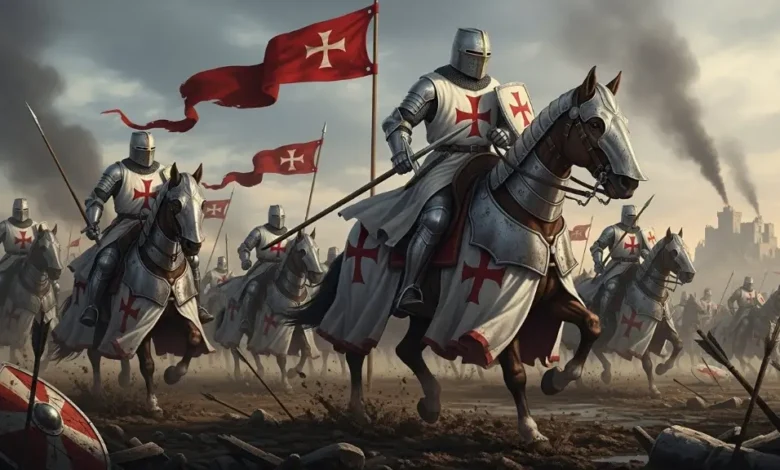
Knights Templar – Medieval Elite Military and Religious Order
The Knights Templar were one of the most famous military orders in medieval Europe, blending religious devotion, military prowess, and financial influence. They became a symbol of chivalry, elite warfare, and international power during the Crusades.
Origins and Formation
Founded in 1119 after the First Crusade, the Knights Templar were created to protect Christian pilgrims traveling to Jerusalem. Their members were both monks and warriors, taking vows of poverty, chastity, and obedience.
- Established by Hugues de Payens and eight companions in Jerusalem
- Combined religious discipline with military training
- Rapidly gained papal endorsement and international support
Military Role and Campaigns
The Templars were renowned for their combat skills, organization, and battlefield effectiveness. They participated in numerous Crusades and fortified key positions in the Holy Land.
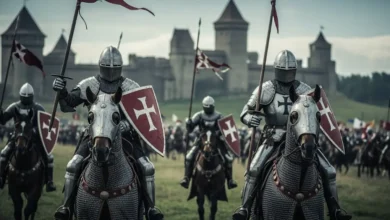
- Elite heavy cavalry trained for shock charges
- Defenders of fortresses such as Acre and Ascalon
- Notable engagement in the Battle of Montgisard (1177)
- Served as strategic advisors and military financiers
Organization and Structure
The Templar Order maintained a strict hierarchy combining military command with monastic oversight.
- Grand Master – supreme authority of the order
- Knights – professional combatants forming the heavy cavalry core
- Sergeants and Foot Soldiers – light infantry and support troops
- Chaplains and Scribes – spiritual guidance and administrative support
Legacy and Historical Impact
The Knights Templar became legendary not only for their battlefield achievements but also for their banking network, which financed Crusader states and European nobility.
- Introduced early forms of international banking
- Inspired later military and chivalric orders
- Symbol of elite warrior culture in medieval Europe