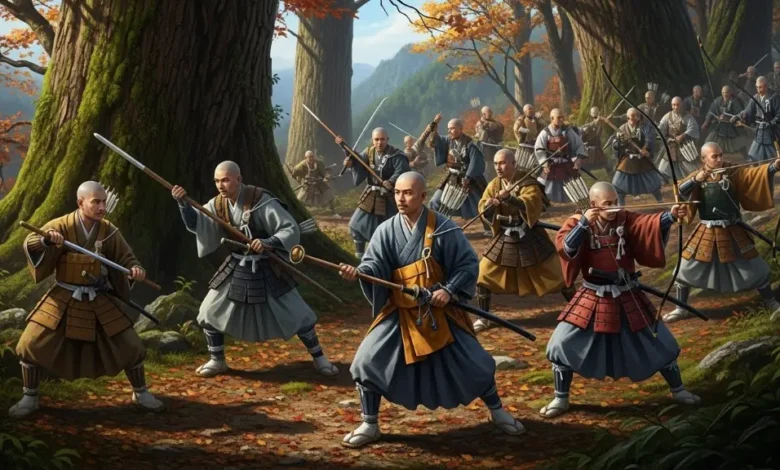
Japanese Sōhei (Warrior Monks)
Monastic Warriors Who Blended Religion and Combat in Feudal Japan
Origins of the Sōhei
The Sōhei were Buddhist warrior monks in Japan, active from the 10th to 16th centuries.
They combined religious devotion with military skill, defending their temples and regional influence.
These elite monks were primarily affiliated with powerful temples such as Enryaku-ji on Mount Hiei
and Kōfuku-ji in Nara, and their armies could field hundreds to thousands of armed monks.
Training and Combat Doctrine
Sōhei training emphasized both spiritual discipline and martial prowess. Monks practiced:
- Kenjutsu (swordsmanship)
- Naginata combat (polearm specialization)
- Archery and strategy
- Team coordination within temple militias
They maintained strict hierarchies and followed temple codes that balanced religious duty with battlefield effectiveness.
Equipment and Tactics
The Sōhei were versatile fighters, skilled in both siege and open-field combat. Standard equipment included:
- Naginata – primary polearm weapon
- Swords and daggers for close combat
- Bows and arrows for ranged support
- Armor adapted for mobility and protection
Tactics relied on combining spiritual intimidation with disciplined formations, often surprising samurai opponents with coordinated temple raids.
Major Campaigns and Influence
Sōhei participated in numerous conflicts, including:
- Defending Mount Hiei against rival warlords
- Engaging in temple wars with other Buddhist sects
- Supporting or opposing daimyo during feudal power struggles
Their presence influenced Japanese warfare by integrating religiously motivated armies into the feudal military structure.
Strengths and Limitations
Strengths
- High discipline and spiritual morale
- Proficient in multiple weapon systems
- Organized in temple-based militias
Limitations
- Dependent on temple resources
- Limited numbers compared to full samurai armies
- Conflicts between religious duties and battlefield decisions
Legacy of the Sōhei
The Sōhei left a lasting mark on Japanese martial culture. They are remembered for blending monastic life with disciplined combat, creating a unique model of
cultural & elite military units that influenced later Japanese warrior traditions.
See also: Medieval & Pre-Modern Precursors