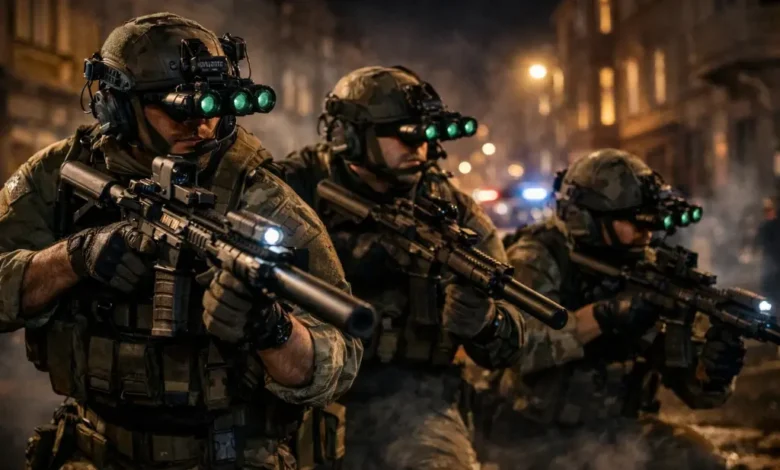
GROM (Poland) – Poland’s Elite Special Operations Force
GROM (Jednostka Wojskowa GROM) is Poland’s premier special operations unit and one of the most respected counterterrorism and direct action forces in Europe. Modeled on Western Tier-1 units, GROM combines precision strike capability, intelligence integration, and exceptional operator autonomy.
Origins and Strategic Context
GROM was established in 1990 in response to emerging post-Cold War security threats, including terrorism and the need to protect Polish interests abroad. Its formation was heavily influenced by close cooperation with allied elite forces such as the British SAS and later joint operations with the US Navy SEALs.
The unit was designed from its inception as a professional, fully volunteer force capable of operating independently or as part of NATO special operations frameworks.
Mission Profile and Core Capabilities
GROM specializes in high-risk missions requiring absolute precision, speed, and operational secrecy. Unlike conventional units, GROM teams operate in small, autonomous elements with significant decision-making authority at the operator level.
- Counterterrorism and hostage rescue
- Direct action and precision raids
- Special reconnaissance and intelligence support
- Maritime counterterrorism and ship boarding
- Protection of critical infrastructure and VIPs
Selection and Training Doctrine
Selection into GROM is among the most demanding in Europe, emphasizing psychological resilience, adaptability, and teamwork under extreme stress. Physical fitness is critical, but mental endurance and decision-making under pressure are decisive factors.
Training philosophy closely mirrors that of Israeli Sayeret Matkal, focusing on mission realism, intelligence integration, and operator independence rather than rigid procedural doctrine.
Operational History and Deployments
GROM gained international recognition during deployments in the Balkans, Iraq, and Afghanistan. Polish operators conducted joint missions alongside US and NATO forces, often assigned to the most sensitive and high-risk objectives.
In Iraq, GROM played a key role in maritime security operations and direct action missions, demonstrating a level of interoperability comparable to top-tier allied units.
Equipment and Tactical Specialization
GROM employs a highly modular equipment philosophy, allowing teams to adapt to maritime, urban, and austere land environments.
- Modern assault rifles and precision weapons systems
- Advanced night vision, ISR, and communications gear
- Combat diving and maritime insertion equipment
- Airborne and fast-rope insertion capabilities
Strengths and Limitations
Strengths of GROM include exceptional NATO interoperability, elite counterterrorism expertise, and a highly selective personnel pipeline that ensures operational quality.
Limitations are primarily related to force size, as GROM remains deliberately small to preserve quality and operational secrecy.
Legacy and Role Within Modern Special Operations
GROM represents the successful post-Cold War integration of Eastern European military forces into Western special operations doctrine. It stands as a benchmark for how smaller nations can field world-class elite units through focused training and strategic partnerships.
Within the broader history of elite military units, GROM occupies a position alongside the most capable modern special forces, bridging regional defense needs with global expeditionary capability.