Covert reconnaissance missions are a critical subset of special operations that involve gathering strategic information deep within hostile or denied territory without detection. These missions are conducted by elite units trained to operate silently, observe without being seen, and provide vital intelligence that informs high-risk operations, including direct action and counterterrorism missions.
Covert reconnaissance is sometimes also referred to as special reconnaissance (SR), and it focuses on intelligence collection, surveillance, target acquisition, and area assessment in environments where traditional reconnaissance methods are not feasible or too risky. :contentReference[oaicite:1]{index=1}
What Is Covert Reconnaissance?
Covert reconnaissance missions involve sending small teams of highly trained operators into hostile, politically sensitive, or denied areas to gather intelligence without revealing their presence. This intelligence can be used to:
- Identify enemy positions, strength, and movement
- Assess terrain and environmental conditions
- Support planning for direct action, counterterrorism, or hostage rescue
- Provide real-time updates during dynamic operations
Unlike overt reconnaissance, covert reconnaissance emphasizes stealth and minimal footprint, enabling forces to gather information without alerting the enemy to their presence. :contentReference[oaicite:2]{index=2}
Units That Conduct Covert Recon Missions
Several special forces units are renowned for their covert reconnaissance capabilities:
- SEAL Team Six / DEVGRU – US Navy SEALs unit capable of covert infiltration and surveillance in maritime and urban environments. :contentReference[oaicite:3]{index=3}
- Särskilda inhämtningsgruppen (SIG) – Swedish special reconnaissance unit focused on covert surveillance and HUMINT. :contentReference[oaicite:4]{index=4}
- CIA Special Activities Division (SAD) – Conducts clandestine reconnaissance in contested regions as part of strategic intelligence missions (not publicly confirmed but widely referenced in literature). :contentReference[oaicite:5]{index=5}
- Joint Special Operations Forces – Many joint units incorporate specialized reconnaissance teams dedicated to covert operations. :contentReference[oaicite:6]{index=6}
Key Tasks in Covert Recon Missions
Operators on covert recon missions may perform one or more of the following tasks:
- Surveillance and Target Tracking – Monitoring enemy movements over time without detection. :contentReference[oaicite:7]{index=7}
- Sensor Emplacement – Placing remote cameras, seismic or other monitoring devices in strategic locations. :contentReference[oaicite:8]{index=8}
- HUMINT Collection – Gathering intelligence through observation or discreet human sources. :contentReference[oaicite:9]{index=9}
- Area Assessment – Providing detailed terrain and environmental data for mission planning. :contentReference[oaicite:10]{index=10}
Examples of Covert Recon Missions
Throughout modern military history, covert reconnaissance missions have played a crucial role:
- Vietnam War Recon Teams – Small recon teams operated across borders to gather enemy movement and strategic information in Laos and Cambodia without large troop deployments. :contentReference[oaicite:11]{index=11}
- World War II Normandy Beach Surveys – Covert Allied reconnaissance teams secretly surveyed landing beaches before the D-Day invasion to measure terrain, slope, and defenses. :contentReference[oaicite:12]{index=12}
- Modern SR in Counterterrorism – Prior to direct action missions like Operation Neptune Spear, extensive covert surveillance and reconnaissance helped plan entry points and force layout. :contentReference[oaicite:13]{index=13}
Training and Skills for Covert Reconnaissance
Operators assigned to covert recon missions undergo advanced training that focuses on:
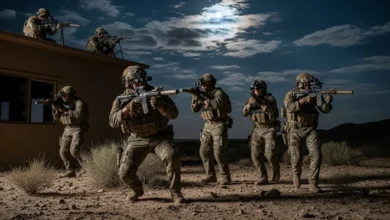
- Stealth movement and concealment
- Surveillance and target acquisition techniques
- Communications and data exfiltration while undetected
- Night operations and low-visibility navigation
This training enables special forces units to remain undetected for extended periods and deliver high-value intelligence back to planners and commanders.
Technology Used in Covert Recon Missions
Modern covert reconnaissance uses a range of tools, including:
- High-resolution optics and night vision systems
- Drones and remote surveillance platforms
- Passive sensors and unattended ground sensors
- Secure encrypted communication systems
These technologies expand the reach and stealth of reconnaissance teams without increasing their physical profile on the battlefield.
Why Covert Reconnaissance Matters
Covert reconnaissance missions are among the most critical for strategic and tactical success. They provide military planners with the actionable intelligence needed to:
- Reduce risk to personnel in direct action operations
- Plan entry and extraction routes with minimal visibility
- Understand enemy intent and strength
- Support larger operational objectives across the battlefield
Without effective covert reconnaissance, larger operations can be compromised or face higher casualty rates.