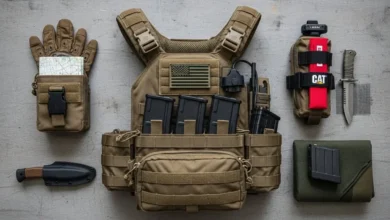
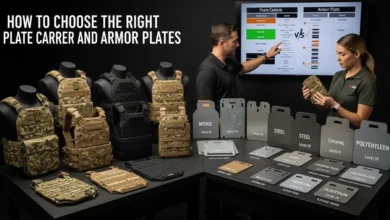
Navigating the complex world of ballistic protection requires a solid plate carrier guide to help you understand the nuances between various systems. A plate carrier is far more than just a vest; it is a critical life-saving component that serves as the foundation for your second-line gear. In modern tactical environments, the primary goal of a high-quality carrier is to hold hard armor plates securely against your vital organs while providing a modular platform for ammunition, communication, and medical supplies.
Whether you are a law enforcement professional, a soldier, or a citizen focused on home defense, choosing between minimalist carriers and full-scale tactical vests depends entirely on your mission profile. A “one-size-fits-all” approach simply does not exist in the realm of personal protection. This guide will walk you through the essential technical aspects of ballistic carriers, from material durability to ergonomic fitment, ensuring you can build a loadout that provides maximum protection without compromising your mobility.
Understanding Plate Carrier Anatomy and Styles
The architecture of a plate carrier has evolved significantly over the last decade, moving away from heavy, cumbersome designs toward streamlined, high-efficiency systems. At its core, the carrier consists of a front and rear bag designed to hold SAPI/ESAPI plates, connected by shoulder straps and a cummerbund. The choice of cummerbund—whether elastic, skeletal, or fully armored—is a key feature that dictates both the stability of the rig and the amount of additional MOLLE real estate available for your gear.
Primary Types of Carriers
- Minimalist / Slick Carriers: Designed for low-visibility operations or to be worn under a chest rig. They focus strictly on holding plates with zero extra bulk.
- Standard Plate Carriers: The industry standard for tactical gear & equipment, offering a balance of protection, comfort, and modularity via laser-cut or traditional webbing.
- Load-Bearing Vests: Larger systems designed to distribute the weight of heavy loadouts, often featuring integrated padding and the ability to accept soft armor inserts alongside hard plates.
Materials and Construction Standards
Most professional tactical vests are constructed from 500D Cordura or proprietary laminate materials that offer high abrasion resistance while remaining lightweight. Look for double-stitched seams and reinforced bar-tacks at the shoulder strap attachment points. High-end carriers also utilize 3D spacer mesh on the interior to create an air gap, reducing heat buildup and improving comfort during extended wear.
Optimizing Your Plate Carrier Setup
Proper configuration is what separates a professional setup from a poorly organized one. The golden rule of this plate carrier guide is to keep your “work space” (the front of your carrier) clear enough to allow for efficient weapon manipulation. Overloading the front with deep pouches makes it impossible to assume a stable prone position and can significantly slow down your transitions between rifle and pistol.
Plate Placement and Sizing
One of the most common mistakes is wearing plates too low. For maximum safety, the top edge of the front plate should sit at the jugular notch (the base of your neck). This ensures your heart and major arteries are protected. The rear plate should be centered on the back, mirroring the front. Remember, sizing the carrier is actually about sizing the plates to your torso dimensions, not your t-shirt size.
Modular Integration and Accessories
- Placard Systems: Use SwiftClips to swap out front panels for different weapon systems (e.g., 5.56 vs. .308).
- Hydration: Mount a water bladder to the rear plate bag to maintain balance and prevent the carrier from pulling forward.
- Shoulder Pads: Add aftermarket padded shoulder wraps if you are carrying a heavy load to prevent the straps from cutting into your traps.
Fitment, Comfort, and Mobility Testing
A well-fitted tactical vest should feel like a tight hug. It must be snug enough that the plates do not bounce when you run, but not so tight that it restricts your lung expansion during heavy exertion. This is where elastic cummerbunds shine, as they allow the carrier to move with your breathing while maintaining a secure fit against your core.
Managing the Loadout Weight
Total weight is the enemy of endurance. Every piece of tactical equipment you add should be scrutinized. Aim for a “fighting load” that allows you to remain mobile for several hours. If your carrier feels excessively heavy, consider switching to lightweight armor plates (Level III PE) or stripping away non-essential utility pouches. Balance is equally important—ensure the weight is distributed evenly between the front and back bags.
Practical Stress Testing
- The Burpee Test: Perform five burpees. If the carrier hits you in the face or sags significantly, your cummerbund tension needs adjustment.
- The Shoulder Check: Practice shouldering your rifle. Ensure the stock makes solid contact with your “pocket” and isn’t slipping off the shoulder straps.
- The Reach Test: Ensure you can reach your IFAK and magazines from various positions, including sitting in a vehicle.
Plate Carrier Guide FAQ
Do I need a plate carrier if I already have a chest rig?
A chest rig provides no ballistic protection. If your environment involves a threat of incoming fire, you need a plate carrier. Many users wear a “slick” carrier under their chest rig for a modular approach.
What is the difference between a plate carrier and a tactical vest?
Generally, a plate carrier is designed primarily to hold hard ballistic plates, while a tactical vest often refers to a platform designed for carrying gear, sometimes including soft armor but not always hard plates.
Can I wash my plate carrier?
Yes, but remove the ballistic plates first. Hand wash the carrier with mild soap and water, then air dry. Never put a carrier in a dryer, as high heat can damage the Cordura fibers and Velcro.