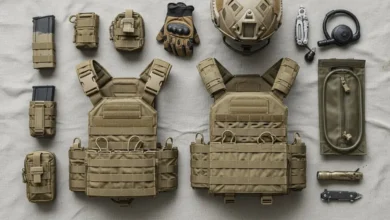
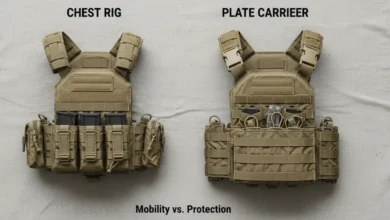
A well-executed chest rig setup guide is essential for anyone looking to transition from a basic kit to a professional-grade loadout. The goal is to create a centralized gear hub that supports your primary and secondary weapon systems while housing life-saving medical supplies. When configured correctly, a chest rig provides unparalleled speed and accessibility.
Efficiency in a chest rig is defined by balance and ergonomics. Every pouch you add must serve a purpose and be reachable under stress. Overloading the platform will lead to fatigue and restricted movement. In this guide, we will focus on the “Big Three” of tactical loadouts: Ammunition, Sidearms, and Trauma Care.
Primary Focus: Rifle Magazine Placement
Your rifle magazines are the heart of your chest rig. They should occupy the most accessible real estate, typically in the center of the chassis. Most modern chest rig setups prioritize 3 to 4 magazines. Use open-top pouches with friction inserts or bungees for the fastest possible reload times.
Ensure the magazines are oriented in a way that facilitates a natural “beer-can” grip. If you are right-handed, your reloads will likely come from your left-hand side. Practice pulling magazines from various positions—standing, kneeling, and prone—to ensure your magazine pouches don’t snag on your harness or clothing.
Secondary Integration: Pistol Magazines and Tools
While many shooters keep pistol magazines on a battle belt, adding 1-2 pouches to your chest rig provides a vital backup. These should be placed on the non-dominant side of your rig. This allows for cross-draw reloads if your belt line is obstructed or if you are operating in a seated position, such as inside a vehicle.
- Multi-tools: Mount a dedicated pouch next to your pistol mags for quick access.
- Tactical Lights: Keep a handheld flashlights reachable for low-light navigation or searching.
- Retention: Use elastic pouches for pistol mags to keep the profile slim and prevent gear from falling out during a sprint.
Critical Component: The IFAK and Medical Setup
Your medical gear is non-negotiable. In a chest rig setup guide, we always emphasize that trauma supplies must be reachable with both hands. A “dangler” pouch hanging below the main chassis is the gold standard for IFAK (Individual First Aid Kit) placement. It keeps the weight centered and leaves the sides of your torso free for arm movement.
Inside your medical pouch, prioritize Hemorrhage Control. This includes hemostatic gauze, pressure bandages, and chest seals. A tourniquet (TQ) should be mounted externally on the rig using elastic loops or a dedicated TQ holder for immediate, one-handed deployment.
Navigation and Admin Essentials
For longer missions, an admin pouch or a map pocket is a valuable addition. Keep it as flat as possible to avoid pushing your rifle away from your body when shouldered. This area is perfect for compasses, notebooks, and GPS units. If your rig has a Velcro backing, you can often tuck these items into internal compartments to save external MOLLE space.
Testing Your Rig’s Ergonomics
Once your gear is mounted, put on the rig and perform a mobility check. A common mistake in a chest rig setup is having the straps too loose, causing the rig to bounce and hit you in the chin during movement. Tighten the harness so the gear stays glued to your chest even during aggressive maneuvers.
- The Prone Check: Can you lie flat without the magazines digging into your stomach?
- The Sling Test: Does your rifle sling get caught on any of the pouches when you transition to your pistol?
- The Reach Check: Can you open your IFAK and deploy a tourniquet using only your “weak” hand?
Chest Rig Setup FAQ
Should I use a split-front or solid chest rig?
A split-front rig is easier to put on over heavy clothing and allows you to lie flatter in the prone position. A solid rig offers more continuous MOLLE space for mounting larger admin pouches or extra magazines.
How do I manage comms wires on my rig?
Use Velcro ties or elastic bands on the shoulder straps to route your radio headset wires. This prevents snagging and keeps your workspace clean and professional.
Can I mount a holster to my chest rig?
While possible, it is generally not recommended unless you are a vehicle driver or pilot. For most tactical applications, a belt-mounted tactical holster provides a faster and more natural draw stroke.