Macedonian Companion Cavalry (Hetairoi) – Alexander’s Elite Cavalry
Era: 4th century BCE | Region: Macedonian Empire
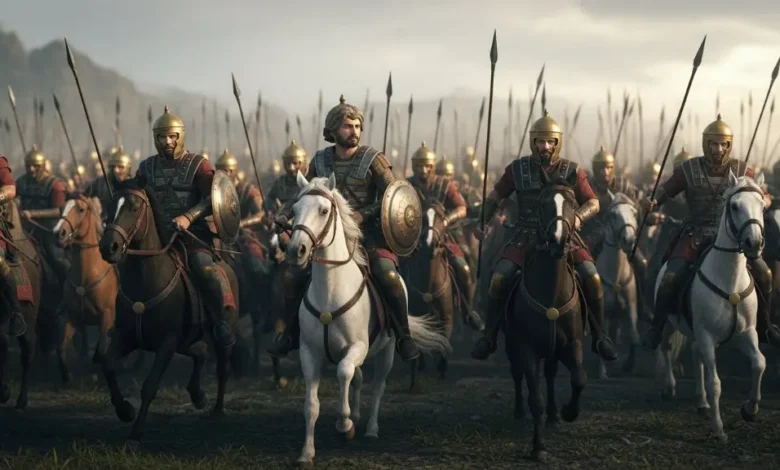
The Companion Cavalry or Hetairoi was the elite cavalry unit of Alexander the Great, playing a pivotal role in his conquest of the Persian Empire. Known for their shock charges and loyalty, they were instrumental in turning battles decisively in Macedonia’s favor.
Origins and Organization
- Composed mainly of Macedonian nobles and close companions of the king
- Organized into squadrons called ilai, commanded by experienced officers
- Served both as a heavy striking force and a mobile command unit
Weapons and Combat Tactics
- Lances (xyston) for charging and close combat
- Swords and shields as secondary weapons
- Highly trained in coordinated cavalry maneuvers and wedge formations
Key Campaigns and Achievements
- Battle of Issus (333 BCE) – decisive cavalry charge against Persian forces
- Battle of Gaugamela (331 BCE) – breaking the Persian line with shock cavalry tactics
- Securing the flanks and pursuing fleeing enemies, maximizing battlefield mobility
Legacy
The Companion Cavalry set the standard for elite cavalry units in history, demonstrating the power of disciplined, well-trained, and loyal cavalry forces in large-scale campaigns. Their tactics influenced later Hellenistic armies and modern cavalry doctrines.