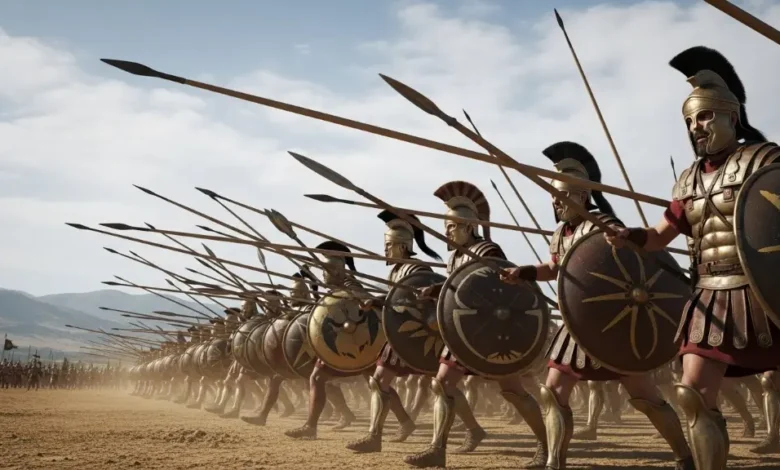
Macedonian Phalanx
The Macedonian Phalanx was one of the most influential military formations in ancient history, transforming infantry warfare and enabling the rapid expansion of the Macedonian Empire under Philip II and Alexander the Great. Within Ancient Military Units, it represents a true tactical revolution.
Origins and Military Reforms of Philip II
The Macedonian phalanx emerged in the mid-4th century BCE as part of Philip II’s comprehensive military reforms, which aimed to modernize Macedonia’s army and compete with the dominant Greek city-states.
- Professional standing army instead of citizen militias
- Standardized training and discipline
- Integration of infantry, cavalry, and support units
These reforms laid the foundation for Alexander’s later conquests and marked a departure from the traditional Greek hoplite model.
Structure and Formation
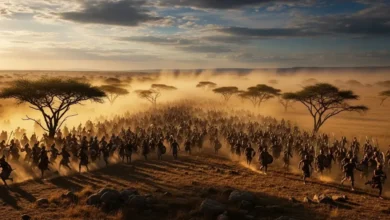
The Macedonian phalanx was a dense infantry formation designed for frontal dominance, typically organized into deep ranks that maximized collective striking power.
- Depth of 16 ranks or more
- Highly disciplined close-order movement
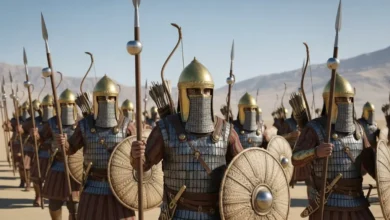
- Interlocking shields for collective defense
Unlike the more flexible Roman Legions, the phalanx relied on cohesion and forward momentum rather than tactical maneuvering.
The Sarissa: Weapon of Dominance
The defining feature of the Macedonian phalanx was the sarissa, a massive pike measuring between 5 and 7 meters, which fundamentally altered infantry combat dynamics.
- Extended reach far beyond traditional spears
- Multiple spear points projecting ahead of the front ranks
- Two-handed use requiring strict formation discipline
This weapon made frontal assaults against the phalanx extremely costly for enemy forces.
Combined Arms Warfare
The phalanx was never intended to operate alone and functioned as the anvil within a broader combined-arms system perfected by Alexander the Great.
- Companion Cavalry delivering decisive flanking charges
- Light infantry and skirmishers protecting the flanks
- Siege engineers enabling rapid conquest of fortified cities
This coordination allowed Macedonian armies to defeat numerically superior and culturally diverse enemies.
Major Campaigns and Battles
The Macedonian phalanx proved its effectiveness across multiple theaters of war, from Greece to the heart of the Persian Empire.
- Battle of Chaeronea (338 BCE)
- Battle of Issus (333 BCE)
- Battle of Gaugamela (331 BCE)
At Gaugamela, the phalanx fixed the Persian center while cavalry strikes shattered the enemy command structure, demonstrating its strategic role rather than independent dominance.
Strengths and Weaknesses
Strengths
- Unmatched frontal offensive power
- Psychological impact on enemy formations
- High cohesion and discipline
Weaknesses
- Limited maneuverability on broken terrain
- Vulnerability on flanks and rear
- Dependence on supporting units
Decline and Historical Impact
The rise of more flexible forces, particularly the Roman legion, exposed the limitations of the phalanx in later centuries, leading to its eventual decline.
Nevertheless, the Macedonian phalanx remains a cornerstone in the history of greatest military units, representing the moment when infantry formations reached unprecedented levels of coordination and lethality.