Rajput Warriors
Fearless Hindu Warriors Defending Their Kingdoms and Honor
Origins of the Rajput Warriors
The Rajput Warriors emerged in India between the 6th and 12th centuries, known for
their valor, loyalty, and strict code of honor (Rajput Dharma).
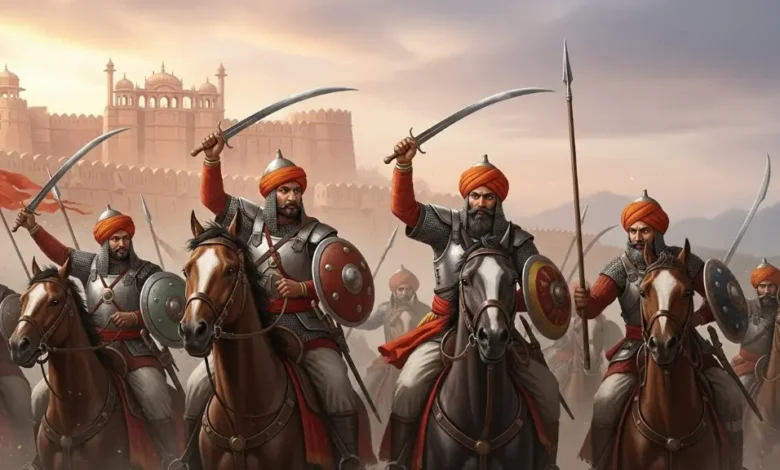
They were primarily aristocratic cavalry warriors defending their
kingdoms against invaders and rivals.
Training and Martial Skills
Rajput boys began martial training at a young age. Their education combined:
- Equestrian skills and mounted combat
- Archery, swordsmanship, and spear techniques
- Siege warfare tactics and fort defense
- Strategic leadership and loyalty to clan and king
The Rajput ethos emphasized courage over life, with a focus on honor and battlefield reputation.
Weapons and Equipment
Rajput warriors were equipped for mobility and devastating cavalry strikes:
- Swords (Talwar) and daggers (Katar)
- Bows for mounted archery
- Spears and lances for charges
- Armored shields, chainmail, and helmets
Notable Campaigns
Rajputs defended their kingdoms against multiple threats, including:
- Arab and Turkic invasions in North India
- Mughal expansion, including famous battles like Haldighati (1576)
- Local rival clans and regional wars
Strengths and Weaknesses
Strengths
- Exceptional cavalry skills
- High morale and code of honor
- Fortress defense expertise
Weaknesses
- Limited coordination between clans
- Occasional overemphasis on honor over strategy
- Dependence on strong leadership
Legacy of the Rajput Warriors
The Rajputs are remembered as symbols of bravery, loyalty, and the
warrior spirit in Indian history. They influenced later elite cavalry
units and left a cultural impact through literature, architecture, and
military tradition.
See also: Polish Winged Hussars for comparison of elite cavalry traditions.