The David Strategy: How Small States Wield Elite Special Forces 🇮🇱🇳🇴🇸🇬
In the grand arena of global power, the conventional wisdom is simple: size matters. Nations with vast economies, huge populations, and sprawling conventional armies—the Goliaths of the world—dictate the terms of conflict. But in the shadows of this belief lies a different, more nuanced truth. A small state, when smart, agile, and daring, can wield a disproportionate amount of influence and power. Its most potent tool for doing so? Its Special Operations Forces (SOF).
For a small nation, elite SOF are not a luxury; they are a strategic necessity. They are the scalpel to a superpower’s sledgehammer, the silent deterrent, the political chess piece, and the ultimate insurance policy. Units like Israel’s Sayeret Matkal, Norway’s FSK/MJK, and Singapore’s Special Operations Task Force (SOTF) are not just smaller versions of their American or Russian counterparts. They are uniquely designed forces that allow their nations to “punch far above their weight” on the world stage.
This article explores the “David Strategy.” We will delve into how and why small states invest so heavily in their elite forces, the unique missions they are designed for, and how they become a cornerstone of national survival and prestige.
🤔 Why Go Special? The Strategic Imperative for Small States
For a large nation like the United States, SOF are one of many tools in a vast military toolbox. For a small nation, SOF are the toolbox. Their investment in these elite units is driven by a unique set of strategic pressures.
- Asymmetric Warfare ⚖️: A small state cannot win a conventional, head-to-head war with a larger neighbor. It’s a simple matter of math. Therefore, they must embrace asymmetric strategies—using unconventional tactics to exploit an adversary’s weaknesses. A small team of SOF operators destroying a key enemy command center or supply depot can have a far greater strategic impact than an entire infantry brigade failing to hold a line.
- Deterrence and Retaliation 💥: The mere existence of a highly capable SOF unit sends a powerful message: “Attacking us will come at a terrible, unpredictable price.” The knowledge that a small, elite unit can reach out and strike with precision anywhere, anytime, acts as a powerful deterrent. It ensures that even a larger adversary will think twice, a concept central to Israeli defense doctrine.
- Political and Diplomatic Leverage 🤝: Having a world-class SOF unit is a mark of national prestige. It opens doors to elite international partnerships. When a small nation’s SOF can train and operate alongside units like the US Navy SEALs or the British SAS, it builds invaluable alliances, gains access to cutting-edge technology and intelligence, and earns a seat at the global security table.
- Resource Efficiency 💰: It is far cheaper to train and equip a 200-man special forces battalion to a world-class standard than it is to maintain a single squadron of modern fighter jets or an armored division. For a small nation with a limited defense budget, investing in high-quality human capital—the SOF operator—provides the greatest possible return on investment.
🎯 The Mission Set: Niche Capabilities and Surgical Strikes
While large-nation SOF have a broad global mandate, the SOF of smaller states are often optimized for a narrower, more specialized set of missions that are critical to their national survival.
1. The Preemptive Strike and Strategic Reconnaissance (Israel’s Model 🇮🇱)
- Unit Focus: Sayeret Matkal
- The Problem: Israel is surrounded by potential adversaries and lacks strategic depth (the physical space to trade for time in an invasion).
- The SOF Solution: Sayeret Matkal was created as an intelligence-gathering and deep-strike unit. Its primary role is to operate far behind enemy lines to provide critical, real-time intelligence for the Israeli Air Force and military command. They are the “eyes and ears” that allow Israel to detect a threat and neutralize it before it reaches their borders. Their missions are often intelligence-driven, surgical, and designed to prevent a larger conflict. Operation Entebbe is the classic example: a strategic, long-range operation executed with surgical precision to solve a national crisis that conventional forces could not.
2. The Guerrilla Legacy and Homeland Defense (Norway’s Model 🇳🇴)
- Unit Focus: Forsvarets Spesialkommando (FSK) and Marinejegerkommandoen (MJK)
- The Problem: Norway has a long border with a major military power (Russia) and a history of occupation (WWII). Its vast, rugged, and sparsely populated arctic terrain is impossible to defend conventionally.
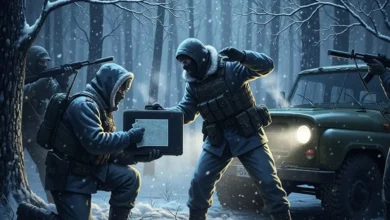
- The SOF Solution: Norwegian SOF are born from their WWII resistance legacy. Their training and doctrine are heavily focused on operating in small, independent teams in their own harsh arctic environment. They are masters of survival, skiing, and clandestine operations in extreme cold. In a conflict, their role would be to act as a “stay-behind” force, waging a guerrilla war against an invader—sabotaging supply lines, conducting reconnaissance, and linking up with allied reinforcements. They turn their country’s harsh geography from a weakness into a weapon.
3. The Technologically Advanced Urban Defender (Singapore’s Model 🇸🇬)
- Unit Focus: Special Operations Task Force (SOTF)
- The Problem: Singapore is a tiny, densely populated, and incredibly wealthy city-state. It is a high-value target for terrorism, and its small size means any attack could have catastrophic consequences.
- The SOF Solution: Singapore’s SOTF is a highly advanced, integrated command specializing in urban counter-terrorism. They are equipped with the best technology money can buy and are trained relentlessly in close-quarters battle (CQB), hostage rescue, and responding to threats in complex urban environments like skyscrapers, subways, and shipping ports. They are the ultimate “home guard,” a small, elite force designed to surgically neutralize any threat to the nation’s critical infrastructure and population centers with maximum speed and precision.
💪 The Selection and Training: Forging the Elite
Because a small state’s SOF is one of its most valuable strategic assets, its selection and training process must be absolutely uncompromising. There is no room for mediocrity.
- Extreme Selectivity: The selection courses for these units are notoriously brutal, with attrition rates often exceeding 90%. They are not just looking for physical fitness, but for an exceptional level of intelligence, maturity, and psychological stability. As a former Sayeret Matkal commander stated, “We are looking for the man who is not only willing to run into the burning building, but who, on the way in, is already thinking about three different ways to get out.”
- Cross-Training and Multi-Skilling: With a smaller pool of operators, each individual must be more versatile. It is common for operators in these units to be cross-trained in multiple skills (e.g., a medic who is also an expert in demolitions). This makes their small teams incredibly flexible and self-sufficient.
- Leveraging Niche Environments: Small states often use their unique national geography as a training advantage. The Norwegians use their arctic mountains, the Israelis use the Negev Desert, and the Singaporeans have become world leaders in urban warfare training. This creates operators who are unrivaled masters of their home turf.
Conclusion: The Asymmetric Advantage
In a world of giants, the small state cannot afford to play by the same rules. It must be smarter, faster, and more precise. Its special operations forces are the ultimate embodiment of this “David Strategy.” They are a testament to the idea that a nation’s strength is not measured solely by the size of its army, but by the quality, character, and resolve of its finest warriors.
These elite units—forged in the crucible of national necessity—provide their countries with an asymmetric advantage. They are a deterrent that whispers of a terrible price for any aggressor. They are a surgical tool that can solve problems beyond the reach of conventional military power. And they are a symbol of national prestige and resilience, proving to the world that even the smallest of nations can produce warriors of the very highest caliber. They are, in every sense of the word, the force that allows a small state to punch far, far above its weight.
❓ Frequently Asked Questions about Small-State Special Forces
Q1: Do these smaller units ever work with larger ones like the US Navy SEALs?
A: Yes, constantly. This is a key part of their strategy. By training and deploying alongside elite units from major powers, they build crucial alliances, gain access to intelligence and technology they couldn’t afford on their own, and prove their own professionalism on the world stage. This interoperability is a major force multiplier for them.
Q2: Are these units only for defense?
A: While their primary justification is often national defense, their unique skills mean they are often deployed overseas to protect national interests. This could include evacuating citizens from a war zone, conducting hostage rescues abroad, or participating in coalition operations alongside larger allies.
Q3: Is there a risk of a small state becoming too reliant on its special forces?
A: Yes, this is a valid strategic concern. Over-reliance on SOF can lead to the neglect of conventional military capabilities. It can also create a political temptation to seek “quiet” military solutions to problems that might be better solved through diplomacy. A healthy defense strategy for a small state involves balancing the unique capabilities of its SOF with a credible conventional force.
Q4: How do these small units maintain such a high level of skill?
A: Relentless and realistic training. Because they have a smaller number of operators, they can invest more resources per person. They train constantly, often in very realistic scenarios, and have a culture of intense self-criticism and “debriefing” where every mistake is analyzed and learned from. The standard is not just success, but perfection.